
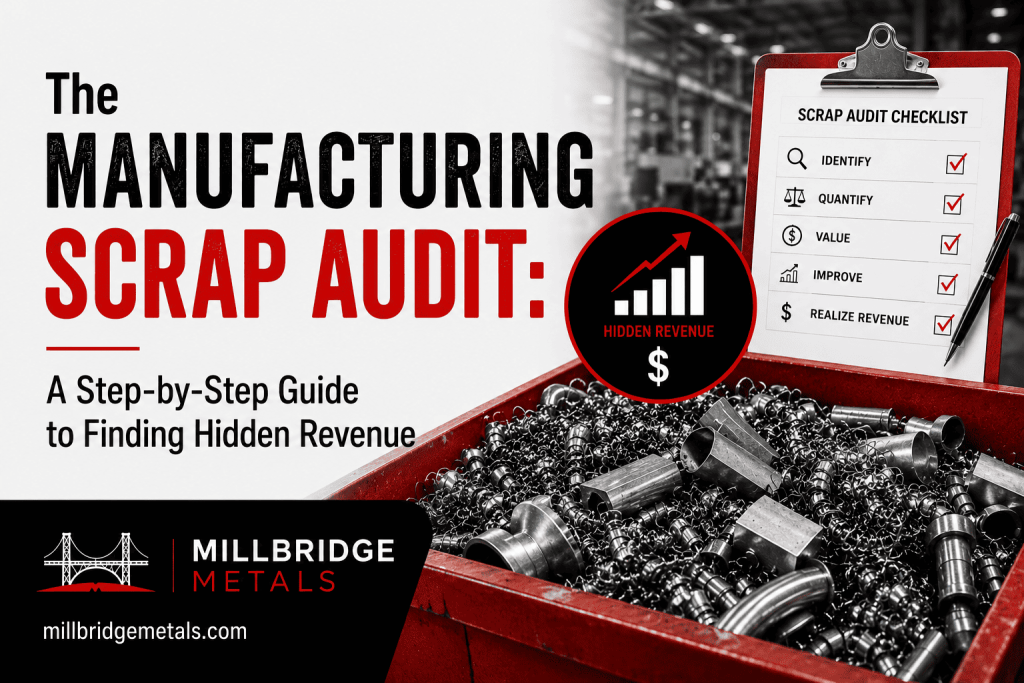
Most plants treat scrap as trash with a small rebate attached. That habit is expensive. A large share of the metal leaving U.S. factories gets misidentified or mixed together, so it sells for far less than it is worth.
A manufacturing scrap audit fixes that. It tells you what you actually produce, what grade it is, and what you should be paid for it. Run it once and you often find revenue you did not know you had.
What is a manufacturing scrap audit?
A manufacturing scrap audit is a structured review of every metal stream your operation produces. You track where the scrap comes from, sort it by type and grade, weigh it, and compare that against what your current buyer pays.
A scrap metal audit treats your waste like inventory, because that is what it is. The goal is simple. Stop guessing, and replace assumptions with numbers you can act on.
Why manufacturers leave money on the table
Two problems cause most of the loss: mixing and misgrading.
When you throw different metals into one container, the buyer prices the whole load at the lowest grade in it. Clean aluminum or copper mixed with steel turnings gets paid like steel. That single habit is the biggest source of lost value in most plants.
Misgrading is the quieter problem. Stainless 304 and 316 look identical but trade at different prices. Without testing, your shipment can get downgraded to a cheaper category. Good recyclers use handheld XRF or LIBS analyzers to confirm alloy content on the spot, which keeps high-value metal from being paid as low-value metal.
The stakes are real. Recycled metal is not a side activity. Around 70% of U.S. steel is made in electric arc furnaces that run mostly on recycled scrap, according to the Recycled Materials Association (ReMA). Your offcuts are raw material for the next batch, so accurate grading matters.
How to run a manufacturing scrap audit, step by step
You can run the first pass with a clipboard, a magnet, and a scale. Work through these steps in order.
Step 1. Map where scrap is generated
Walk the floor. List every point that produces metal waste: stamping, machining, cutting, packaging, maintenance, and rejected parts. Note which metal each one makes. You cannot recover value from a stream you never counted.
Step 2. Separate by type, then by grade
Split ferrous from non-ferrous first. A magnet does the rough sort, since it sticks to steel and iron but not to aluminum, copper, or brass. Then break the non-ferrous further, because a clean aluminum stream is worth more than a mixed one. Give each grade its own bin so nothing gets cross-contaminated. Clean separation is also the first thing a metal processing operation does to lift a load’s grade.
Step 3. Grade against ReMA specifications
Match each pile to a recognized grade. ReMA maintains the Scrap Specifications Circular, the standard grade definitions that buyers and mills use to price ferrous and non-ferrous material. When your scrap maps to a named spec, you get paid for exactly what it is instead of a vague estimate.
Step 4. Audit what you pay to throw away
Check your dumpsters and waste hauls. Steel banding, drums, offcuts, and wire often get tossed as garbage. You pay to dispose of metal that a buyer would pay you for. Every pound you move from the trash to a graded bin flips a cost into income.
Step 5. Verify weights and tickets
Track the weight of every load that leaves your dock and keep the scale tickets. Under ReMA terms, a ton means 2,000 pounds unless your contract says otherwise. Matching your records to the buyer’s tickets shows whether you are paid for everything you ship.
Step 6. Compare price to grade
Line up what you were paid against the grade you shipped. If clean copper sold at a mixed-metal rate, the problem is either your sorting or your buyer. This is where the audit turns into a dollar figure.
What manufacturing scrap recycling looks like after the audit
The audit gives you a map. The payoff comes from a standing industrial scrap management system that keeps every load sorted and graded.
In practice that means the right containers on your dock for each material and a pickup schedule that matches your output. Millbridge Metals sets this up as a professional scrap management program and runs it as full industrial and commercial recycling. Where a load pays more sold direct, the team handles mill brokerage so you skip the middleman.
Where the hidden revenue usually hides
A few streams cost manufacturers the most:
- Machining swarf and turnings, which look worthless but pay well when clean and dry.
- Stainless and aluminum alloys that get downgraded when nobody tests them.
- Insulated wire and electric motors, where the copper inside is worth the effort to recover.
- Anything you currently pay to send to the landfill.
None of this needs new machinery. It needs sorting, grading, and a container setup that makes the right habit the easy one.
Manufacturing scrap audit FAQ
How often should I run a scrap metal audit?
Once a year is a fair baseline, plus any time your production line, your materials, or your scrap buyer changes. High-volume plants benefit from a quick quarterly check on grades and weights.
Do I need to stop production to do an audit?
No. The floor mapping and sorting review happen alongside normal operations. You are measuring what already flows, not shutting anything down.
What is the difference between a scrap audit and manufacturing scrap recycling?
The audit is the diagnosis. Manufacturing scrap recycling is the ongoing program that acts on it through sorting, container service, grading, and selling to the best buyer.
Turn your scrap audit into a recovery plan
You can do the first pass yourself. The harder part is grading accurately and proving the numbers against market rates.That is the work Millbridge Metals does for manufacturers across the Cincinnati area and beyond. The team starts every account with an audit, then builds a roadmap to recover more from each load. To find out what your scrap is really worth, schedule a scrap evaluation and bring your last few months of tickets.